
In Del City, the weather does not always ease into a bad mood. One minute, the sky looks ordinary. The next, phones are buzzing, tree branches are moving, and everyone is trying to remember what still needs to be brought inside. When severe weather strikes, your garage often becomes the place where vehicles, tools, lawn equipment, holiday decorations, and emergency supplies all need protection at once.
That is why a practical garage protection checklist matters. It helps you catch small potential issues before high winds, heavy rain, hail, extreme temperatures, or power outages turn them into costly repairs. It also helps you avoid rushing around the garage while severe thunderstorms are already close.
At Jolly Goat Garage Doors, we’ve seen loose hardware, tired seals, and damaged panels become much bigger headaches once an Oklahoma storm gets rolling. A little routine care now is easier than wrestling with a stubborn garage door while the weather radio is going off.
On a calm day, walk through this checklist, take photos, locate the emergency release, and keep the opener manual somewhere the family can actually find it—not behind three boxes of holiday decorations.
Start With a Thorough Garage Door Inspection

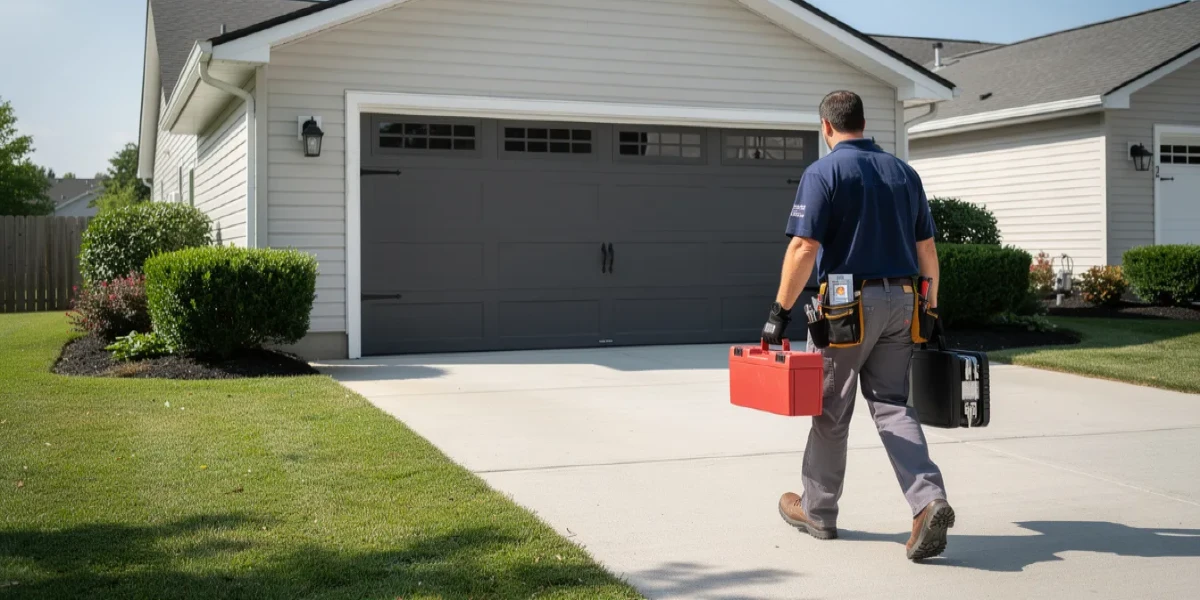
A garage door may look fairly simple from the driveway, but every push of the remote sets a heavy system of panels, tracks, springs, cables, rollers, and hardware in motion. It also covers a very large door opening, which means its condition can affect the garage’s ability to resist wind and rain. High-wind guidance from the U.S. Department of Energy’s Building America Solution Center explains that garage doors can be vulnerable during major wind events and that failure can allow wind and water into the structure. Check for dents, bends, separation, rust, cracks, or places where the door appears to bow. Minor cosmetic marks are not always urgent, but damaged panels can reduce the door’s ability to move evenly and seal correctly.
Next, inspect the tracks, hinges, rollers, brackets, and mounting hardware. Look for loose hardware, missing fasteners, worn rollers, or tracks that appear bent or pulled away from the walls. Do not loosen, move, or adjust parts connected to spring tension. Garage door springs and cables help carry the door’s weight, and a mistake around those components can be dangerous.
You should also watch the door complete one full opening and closing cycle. It should move smoothly without shaking, scraping, slamming, or hanging unevenly. New rattles, jerky motion, frayed cables, gaps between panels, or a crooked bottom edge are signs that a professional inspection is worthwhile.
Homeowners should regularly inspect the door for unusual noises, uneven movement, loose hardware, and visible damage. During a Jolly Goat tune-up, we conduct a thorough inspection of the complete system and explain what actually needs attention. This helps ensure optimal performance while leaving still-good parts exactly where they belong.
Check Springs, Cables, Hinges, and Tracks Safely
Garage door springs play a critical role in balancing the door’s weight. When a spring is worn or broken, the opener may strain, the door may feel unusually heavy, or the system may stop moving altogether. Never attempt to adjust spring tension, remove bottom brackets, or repair frayed cables yourself.
From a safe distance, look for visible gaps in a torsion spring, stretched extension springs, loose cables, cracked hinges, or metal components with heavy rust. Listen for popping or grinding. You do not need to diagnose the exact part yourself. If a spring has a visible gap, a cable is fraying, or the door is grinding like it woke up on the wrong side of the garage, stop using it and call a trained technician.
Lubricate the Correct Moving Parts
Follow the manufacturer’s instructions before applying lubricant. If permitted, use a garage-door-approved silicone-based lubricant on appropriate hinges, bearings, and rollers—but not on tracks, belts, safety sensors, or sealed components. Lubricant may quiet normal movement, but it cannot fix a bent track, broken spring, damaged roller, or worn cable. Sometimes it only makes the problem smell nicer.
Seal the Door Against Wind, Rain, and Extreme Temperatures
Good garage weatherproofing in Del City begins where the door meets the floor, sides, and top of the opening. Close the door during daylight and look for gaps, flattened weather stripping, torn bottom seals, cracks in the garage floor, low spots, or signs that rain enters beneath the door.
A proper seal helps with preventing drafts, dust, insects, and wind-driven rain. If light still appears after the weather stripping is replaced, the problem may be alignment, floor damage, or a crooked door. New weather stripping cannot sweet-talk a crooked door into lining up, so our Jolly Goat technicians check the cause before recommending a new seal or adjustment.
Consider an Insulated Garage Door
An insulated garage door can slow heat transfer, reduce outside noise, and make an attached garage more comfortable during Del City’s hottest and coldest stretches. Insulation makes the biggest difference when the garage shares walls or a ceiling with conditioned living space and the door has a proper perimeter seal. Although every home is different, reducing heat transfer through the garage may also help manage energy costs.
An insulated garage door is not automatically rated for extreme weather or high winds. Wind resistance depends on the entire assembly, including the panels, tracks, supports, mounting hardware, fasteners, and installation.
At Jolly Goat Garage Doors, we help homeowners compare repair and replacement without pressure games. If a solid repair will keep the door working safely, we will tell you. If the door has reached the end of the trail, we will walk you through materials, insulation, opener compatibility, and design options without turning the conversation into a sales rodeo.
Test the Opener and Every Safety Feature
The garage door opener should guide a properly balanced door. It should not have to fight against broken springs, damaged tracks, or the full door’s weight. If the opener strains, stops midway, or sounds noticeably different, continuing to press the button can place more stress on the motor and hardware.
Test the photoelectric sensors near the floor. Both photoelectric sensors should be clean, aligned, securely mounted, and free from obstruction. Close the door using the wall control, then pass a long object through the sensor beam without placing yourself under the door. The door should automatically reverse or refuse to close when the beam is interrupted.
Next, follow the opener manufacturer’s instructions to test the auto reverse function. A correctly functioning auto reverse system should automatically reverse when it detects an obstruction. If the safety sensors or contact-reversal test fails, stop using automatic operation until the problem is corrected.
Make this a monthly safety check rather than a once-a-year experiment. The Consumer Product Safety Commission recommends regularly testing the opener’s reversing feature and arranging service if the door fails the test.
Whether you have a moody sensor, an unresponsive wall control, or an opener that has gone on strike, our Jolly Goat team can diagnose the complete system and get it operating safely again.
Prepare for Power Outages and Manual Operation
Severe storms and power outages tend to arrive as a package deal, so every adult in the house should know how to operate the door manually before the lights go out. Read the opener manual and locate the emergency release handle. Practice only when the garage door is fully closed and appears to be in good condition.
Never pull the emergency release while the door is open, crooked, damaged, or unusually heavy. A door with a broken spring may drop because the springs are no longer supporting the door’s weight. If the door will not move safely, leave it closed and call for service.
A battery backup can keep compatible opener systems working during power outages. A surge protector may also help protect electronic opener components from certain electrical surges, although no device can guarantee protection from every lightning event. Some compatible opener systems connect to a smartphone app, allowing you to check the door’s status and receive activity alerts when power and internet service are available.
Include backup lighting, charged phones, portable batteries, and the opener’s manual release instructions in your household emergency preparedness plan. Ready.gov recommends keeping backup batteries and charging options available as part of an emergency kit.
Protect the Garage Interior, Floor, and Stored Belongings
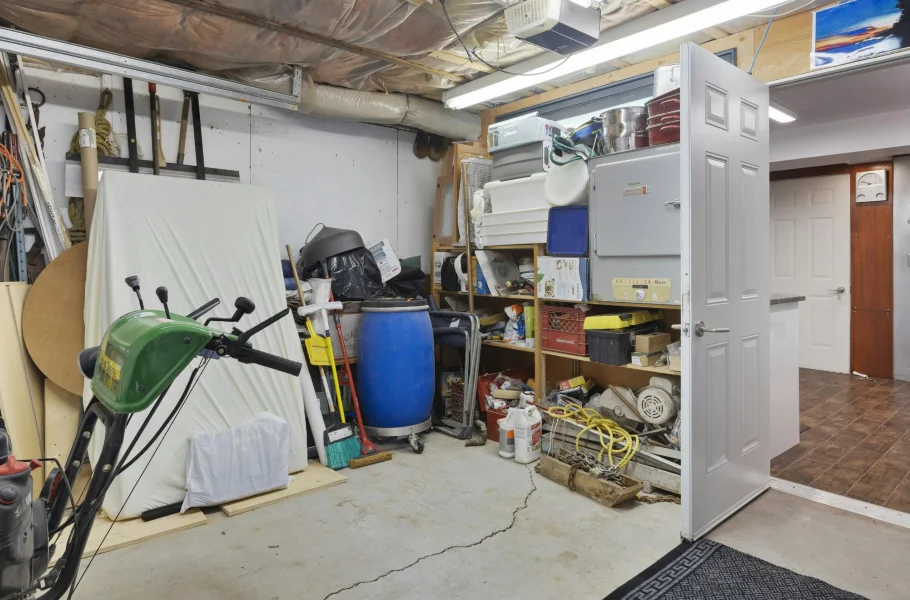
Move cardboard boxes, documents, electronics, paint, and valuable stored belongings off the garage floor. Use sturdy shelving or sealed plastic containers. Keep heavier items on lower shelves so they are less likely to fall during high winds or vibration. Secure tall cabinets to the walls and keep the path from the house to the garage exit clear.
Before severe weather strikes, bring outdoor furniture, toys, tools, trash cans, and loose decorations into a secure location. Flying debris can damage garage door panels, windows, vehicles, and siding. Avoid stacking those items directly against the garage door, where they may interfere with operation or become hazards if the door moves.
Also, inspect the ceiling, side entry door, windows, and electrical panels for water stains or damage. Widening cracks, bowed walls, repeated flooding, or movement around the door opening may point to structural concerns or broader structural issues. Those conditions may require a qualified building professional in addition to garage door service.
Complete This Extreme Weather Garage Protection Checklist
When the forecast starts using phrases such as “large hail,” “damaging winds,” and “take cover,” it is not the time to start a three-hour garage project. Use this shorter checklist to handle the important items while the weather is still calm.
- Inspect the garage door panels, tracks, hinges, springs, cables, and mounting hardware from a safe distance.
- Check the bottom seal and weather stripping for gaps, tears, and signs of rain entry.
- Confirm the door opens, closes, and seals without shaking or scraping.
- Test the safety sensors and auto reverse according to the opener manufacturer’s instructions.
- Review how to operate the door manually when it is fully closed and safe to move.
- Charge phones, prepare backup lighting, and confirm whether your opener has battery backup.
- Move vehicles inside and secure outdoor objects that could become flying debris before hail or severe storms arrive.
- Lift valuable stored belongings off the floor and keep electrical panels accessible.
- Photograph the garage, vehicles, and valuable contents for emergency preparedness and insurance records.
- Do not use the open garage area as a tornado shelter. A separate FEMA- or ICC-rated safe room installed inside or beneath a garage is different; otherwise, move to your designated storm shelter or a small interior room on the lowest floor.
- Schedule repairs before the storm if you notice frayed cables, broken springs, loose hardware, damaged panels, or other potential issues.
Complete these steps before extreme weather reaches the area. Once a warning has been issued or the storm is close, stop working in the garage and move to your designated shelter. Do not stay near the garage door to watch hail, wind, or debris.
Inspect the Garage Again After the Storm
Wait until conditions are safe before checking for damage. Begin outside and look for downed power lines, broken branches, standing water, shattered glass, roof damage, and debris around the driveway. Do not touch electrical wires or walk into standing water where electrical hazards may be present.
From a safe position, inspect the garage door for new dents, bowed panels, gaps, damaged tracks, loose hardware, or a shifted frame. Do not operate the door if it looks crooked, has come out of the tracks, or has visible cable or spring damage. Running the opener can worsen damage and create costly repairs.
Check the garage floor, ceiling, walls, opener, stored belongings, and electrical panels for water or impact damage. When it is safe, photograph visible damage before beginning cleanup.
Frequently Asked Questions
How often should I inspect my garage door for storm readiness?
Give the door a basic visual inspection every few months and before severe weather season. Test the opener’s reversing system monthly, and schedule a professional tune-up at least once a year—or sooner if the door becomes noisy, crooked, slow, or unreliable.
What should I do if the garage door will not open during a power outage?
Check the opener instructions and use the emergency release only when the door is fully closed, stable, and safe. Do not try to lift a very heavy, crooked, or damaged door. It may have a broken spring or another serious problem.
Should I open the garage door during a tornado or severe storm?
No. Keep the garage door closed and move to your designated safe shelter. Do not stay in the garage to watch the storm, and do not attempt repairs while high winds, lightning, hail, or flying debris are present.
Why is regular maintenance important for a garage door?
Regular maintenance helps identify worn rollers, loose hardware, damaged seals, and opener trouble before small issues become significant problems. It can also support safer operation, reduce unnecessary strain on the system, and help the door maintain optimal performance throughout Del City’s changing weather.
What garage door maintenance can homeowners do themselves?
Basic garage door maintenance includes keeping the tracks clear, cleaning the safety sensors, checking weather stripping, and watching the door complete a full opening and closing cycle. Homeowners should not adjust springs, cables, or other parts under high tension. Those repairs should always be handled by a trained garage door technician.
Let Jolly Goat Help Keep Your Del City Garage Storm Ready
You cannot control what Mother Nature throws at Del City, but regular inspections, working safety features, proper seals, and timely repairs can help keep your garage storm ready.
Storm damage has a habit of showing up at the least convenient time. If your door is rattling, sagging, leaking, stuck, or acting a little less than jolly, call Jolly Goat Garage Doors at 405-367-1020. We provide 24/7 garage door repair, spring service, opener repair and installation, tune-ups, weather stripping replacement, and new garage door installation for Del City homeowners. Request a free estimate before the next storm—or after the skies clear if your door took a beating.