

If you live near the lake in Sulphur, you already know the weather here doesn’t mess around. One week it’s sunny and mild, and the next you’re dealing with driving rain, gusty wind, or an early cold snap rolling off the water. Oklahoma City and the surrounding region see around 32 to 36 inches of precipitation a year, and a lot of that moisture finds its way toward the one part of the house most homeowners forget about: the garage.
At Jolly Goat Garage Doors, we talk to Sulphur homeowners every week who are dealing with drafty garages, damp concrete floors, or a door that just doesn’t seal like it used to. That’s why we put together this garage weatherproofing guide. We want to walk you through the simple tips, materials, and installation steps that make a real difference, so your garage stays dry, comfortable, and protected all year long. And if you’d rather have our team handle it for you, garage weatherproofing in Sulphur is one of our specialties, and we’re always happy to help.
Why Garage Weatherproofing in Sulphur Matters

A garage is one of the biggest openings in your home’s building envelope, and it’s often the most overlooked. When outside air, rain, snow, or debris can slip past your garage door system, it doesn’t just make the garage uncomfortable. It can lead to heat loss, higher energy bills, and even moisture problems that damage your belongings, your vehicle, or the concrete floor itself.
The garage door is frequently a significant source, and in many homes it’s actually the major source of air infiltration in the entire structure. Small gaps around the door frame, a worn bottom seal, or old weatherstripping that’s cracked and brittle can all let in cold air during winter months and hot, humid air during the summer. Weatherproofing your garage properly protects against water damage from rain and snow, keeps out dirt and debris, and helps regulate the temperature of any room that shares a wall with the garage, especially in attached homes.
Start With the Garage Door Weather Stripping
Most garage doors rely on a combination of weatherstripping materials to create a tight seal around the entire door panel. Over time, rubber and vinyl components dry out, crack, or pull away from the door frame, which opens the door (literally) to outside air, moisture, and pests.
Garage Door Sweep and Bottom Seal
The bottom edge of the door is where most of the trouble starts. The garage door sweep, sometimes called the bottom seal, sits at the bottom of the door and creates the barrier between the door and the floor. When this seal wears down, it’s an easy entry point for rain, snow, dirt, and even small critters looking for shelter.
We recommend EPDM rubber for bottom door seals because it holds up well in extreme temperature swings, which is exactly what we get here in Sulphur. To replace it, most homeowners can pull the old seal out of its track, clean the area, and slide a new rubber or vinyl strip into place. A utility knife makes trimming the new strip to length quick and easy. It’s a small project, but a properly installed bottom seal blocks water and debris from entering the garage and goes a long way toward a tight seal along the entire bottom of the garage door.
Top Seals and Side Seals
It’s not just the bottom of the door that needs attention. Top seals and side seals along the door frame matter just as much. Both the door and the frame need to work together to block drafts, so if you’re only replacing the bottom seal and ignoring the sides and top, you’re leaving gaps that outside air can still sneak through.
Sealing Gaps Around the Door Frame
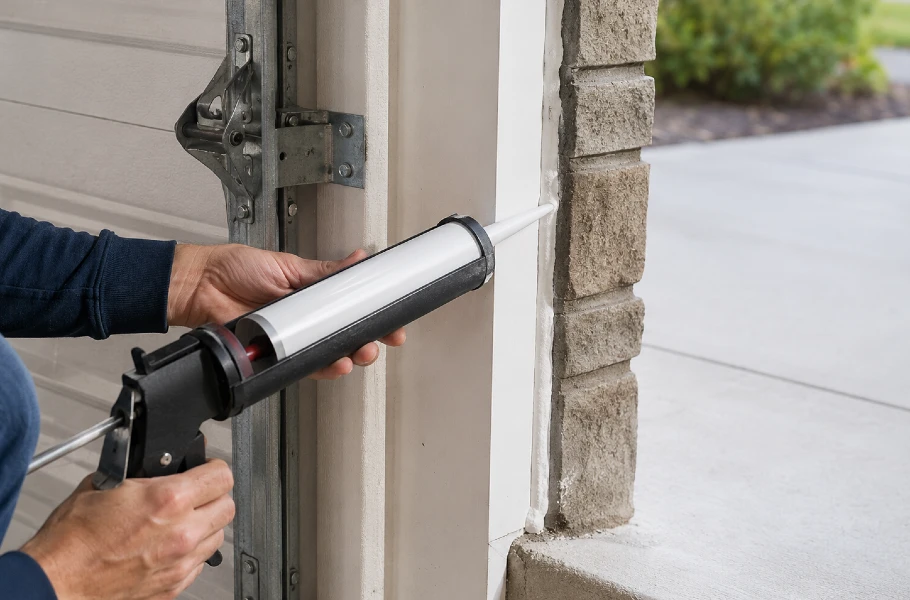
Beyond the moving parts of the garage door system, take a look at the door frame itself. Small cracks and larger gaps between the frame and the surrounding wall are common, especially in older installations. For small cracks, a bead of silicone or polyurethane caulk seals the gap effectively and holds up well against exterior conditions. For larger gaps, a backer foam or backing rod should be used first (generally for gaps around a half inch deep or a quarter inch wide), with expanding foam or caulk applied over the top to finish the seal.
Don’t forget the little things either. Switch plates and electrical outlets on garage walls can let in air through openings as small as 1/64 of an inch, which sounds tiny, but adds up over an entire wall. Sealing these gaps with foam gaskets or caulk is a simple, low-cost way to cut down on air leakage.
Threshold Seals and Surface Water
If your garage tends to collect surface water along the bottom of the door, especially during a hard rain, a threshold seal is one of the best upgrades you can make. A threshold seal attaches directly to the garage floor and creates a raised barrier that blocks water and wind from ever reaching the door and the floor junction. Heavy-duty rubber threshold strips can create a nearly watertight barrier, which is a big help if your driveway slopes toward the garage or you’re prone to flooding during storms.
Waterproofing the Garage Floor
The concrete floor takes a beating from rain, snowmelt, road salt, and general moisture tracked in from outside. Left untreated, that moisture can seep into the concrete, leading to cracks, mold, and long-term damage.
Applying a waterproof paint or coating helps protect the floor from water and external elements. Waterproof paint is budget-friendly but typically needs to be reapplied every few years. Epoxy coatings last longer and hold up better to wear, though they take a bit more work to apply correctly. Crystalline waterproofing agents are another option, and they actually bond with the concrete to create a permanent seal from within. Whichever route you choose, protecting the floor is a key part of any complete garage weatherproofing guide, and it pairs nicely with sealing the walls and door for a fully protected space.
Insulation and R-Value
Sealing gaps stops the drafts, but insulation is what actually helps control the temperature inside your garage. Garage door insulation kits typically include pre-cut insulation panels and adhesive, and most kits carry an R-value of R-8 or higher.
The difference insulation makes is bigger than most people expect. An insulated garage door can keep a garage around 12 degrees warmer when it’s 20 degrees outside, and that same insulation can make a garage roughly 12 degrees cooler during the peak of summer. If your current door is uninsulated, replacing it with an insulated model is one of the most effective upgrades for energy efficiency, and it takes real pressure off your energy costs year-round. Insulating garage walls and ceilings, especially in attached garages, can also help regulate temperatures throughout the connected rooms of your home.
Watch for These Everyday Culprits
A few more spots worth checking as you go through your garage:
- Windows: Old caulk around garage windows dries out and cracks, letting in air, rain, and moisture.
- Door panels: Warped or dented door panels can create gaps that weatherstripping alone can’t fix.
- Grip strips: Adding grip strips along the door track helps keep weatherstripping seated properly so it doesn’t pull loose over time.
- Ground level: Check the ground and slab around the garage for erosion or settling that could be redirecting water toward the door.
A quick trick for finding hidden leaks around the door seal is mixing dish soap with water and spraying it along the seams while the door is closed. Bubbles forming mean air is escaping, and that’s your sign to reseal that section.
Simple Tips for Seasonal Maintenance
Weatherproofing isn’t a one-time project. Regularly inspecting your weatherstripping, caulk, and seals helps you catch small cracks before they turn into large gaps. A good routine looks like this:
- Check the bottom seal and door sweep for cracking or shrinkage each fall before winter months set in.
- Inspect the door frame and walls for new gaps after major storms.
- Reapply caulk or waterproof paint as needed, especially around the floor and lower walls.
- Test the door for a tight seal by looking for daylight around the edges when it’s closed.
- Consider a dehumidifier if you notice consistent moisture or humidity buildup, which helps prevent mold growth over time.
Staying on top of these small tasks protects your garage from external elements, keeps energy costs down, and extends the life of your garage door system.
Why Sulphur Homeowners Trust Jolly Goat Garage Doors

Weatherproofing a garage involves many parts, from the weather seal on the door itself to the concrete floor beneath your feet. Our team at Jolly Goat Garage Doors has helped countless homeowners around Sulphur and the surrounding lake area tackle every aspect of this, from replacing worn weatherstripping and installing new threshold seals to upgrading old, uninsulated doors with high-R-value insulated models.
We know exactly which materials hold up best against Oklahoma weather, and we make the whole process simple, whether you need a quick sweep replacement or a full door installation. If your garage has been feeling drafty, damp, or just plain uncomfortable, don’t wait for the next storm to roll in off the lake. Reach out to Jolly Goat Garage Doors for free estimates, and let our friendly team help you get a garage that stays dry, efficient, and protected no matter what the weather brings.