
So, you’re thinking about getting a new garage door? Smart move! Whether your old garage door is making sounds like a rusty shopping cart or you’re simply ready to give your home’s exterior a stunning makeover, you’ve come to the right place.
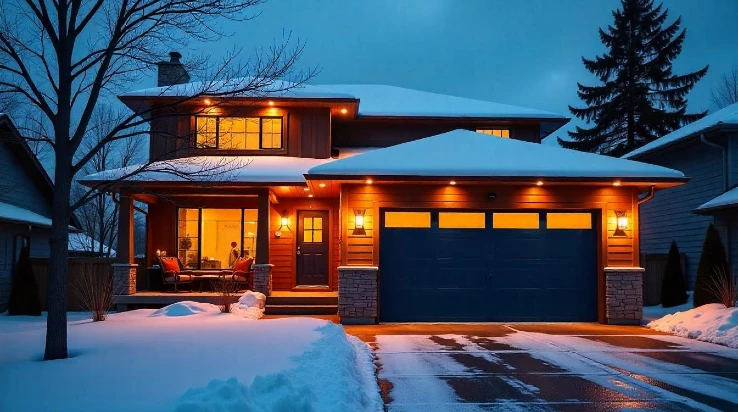
Here’s the thing: choosing the perfect garage door isn’t just about picking something that looks pretty (though that’s definitely part of the fun!). It’s about finding the right balance between style, budget, energy efficiency, and durability. Your garage door is like the handshake of your house – it’s one of the first things people notice, covering up to 30% of your home’s curb appeal!
But let’s be real. The garage door buying process can feel overwhelming. Should you go with steel or wood? What about insulation? Do you really need those fancy windows? And what on earth is an R-value anyway?
Related Article: Broken Arrow Garage Opener Installation Guide
Here at Jolly Goat Garage Doors, we will walk you through everything you need to know before making this important investment for your Broken Arrow home. From materials and styles to costs and installation tips, we’ll help you make the right choice without the headache.
Ready to transform your home’s exterior and boost that curb appeal? Let’s dive in!
Types of Garage Doors
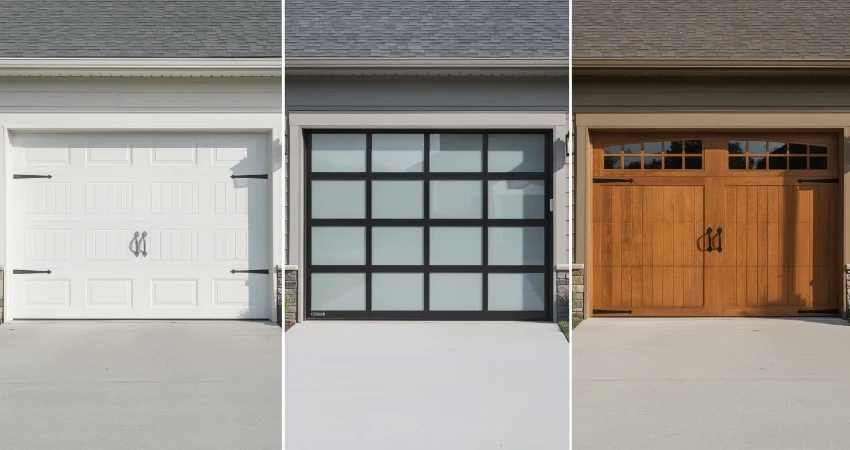
Not all garage doors are created equal, folks! Let’s break down the main styles you’ll encounter during your search for the perfect door.
Sectional Garage Doors
Sectional garage doors are the rock stars of the garage door world – and for good reason! These doors are made up of panel sections connected with hinges, and when the door opens, it rolls up on tracks along your garage ceiling.
Why do so many homeowners love sectional doors? They’re incredibly space-efficient (no swing radius to worry about!), they seal better against Oklahoma’s unpredictable weather, and they come in a mind-boggling variety of door styles and materials. Plus, they work beautifully with automatic garage door openers – because who wants to manually lift a door when you’re rushing to work on a Monday morning?
Pros: Maximum curb appeal options, excellent insulation, fits any architectural style, easy to automate
Cons: More garage door parts to potentially maintain, slightly higher upfront cost
Roll-Up Garage Doors
Roll-up doors are the practical, no-nonsense option. These doors coil up around a drum above the opening – think of them like a gigantic window shade. You’ll often see these on commercial buildings, but they’re becoming more popular for residential garages, especially for folks who need to maximize their garage space.
Pros: Ultimate space-saver, incredibly durable, minimal maintenance
Cons: Limited style options, can be noisy, not the most aesthetically pleasing for a home’s exterior
Side-Hinged (Carriage House) Doors
Ah, the classic look! Side-hinged doors swing outward like old-fashioned barn doors, giving your home that charming, vintage carriage house vibe. These are perfect if you’re going for a more traditional or rustic architectural style.
Pros: Timeless aesthetic, easy to personalize with decorative hardware, great for homes with shorter ceilings
Cons: Requires clearance space in front of your garage, can be tricky in high winds (hello, Oklahoma weather!), manual operation or special opener needed
Tilt-Up Canopy Doors
The budget-friendly option! Tilt-up doors are one solid piece that tilts up and back into your garage. They’re simple, straightforward, and get the job done without breaking the bank.
Pros: Lower cost, fewer garage door parts to replace, simple mechanism
Cons: Takes up ceiling space when open, limited design options, blocks part of the opening when raised
Garage Door Materials Compared
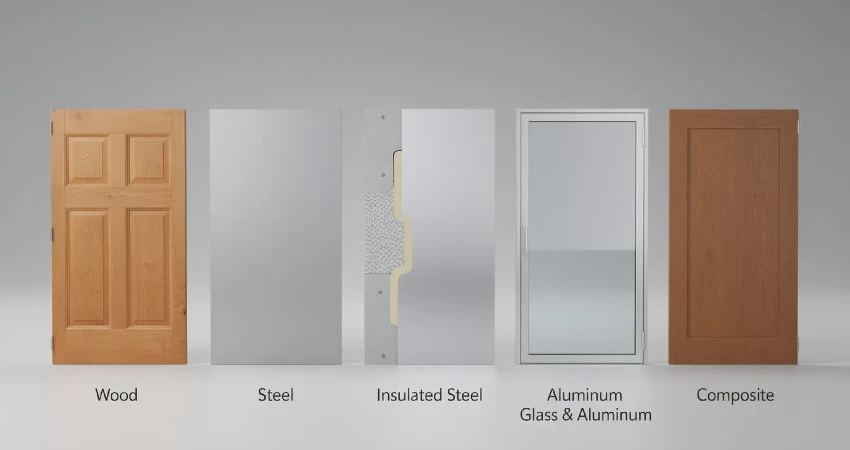
Choosing the right material for your new garage door is crucial. Here’s what you need to know about each option:
Steel Garage Doors
Steel is the heavyweight champion of garage door materials – and we mean that in the best way! Steel doors are durable, low-maintenance, and can handle Broken Arrow’s weather like a champ. They can be insulated for energy efficiency and come in tons of door styles, from traditional raised panel to sleek contemporary designs.
Best for: Most homeowners looking for the perfect balance of durability, affordability, and style options
Cost Range: $800–$2,000
Maintenance: Low – just keep it clean and occasionally check the hardware
Wood Garage Doors
Want that wow factor? Wood garage doors bring natural beauty and custom garage doors appeal that other materials just can’t match. They’re perfect for creating a truly unique look that complements your home’s curb appeal. However, they do require more TLC to protect against moisture, warping, and insect damage.
Best for: Homeowners who want a premium, custom look and don’t mind regular maintenance
Cost Range: $1,500–$4,000
Maintenance: High – requires regular staining or painting
Aluminum Garage Doors
Lightweight and rust-resistant, aluminum doors are the laid-back cousin in the garage door family. They’re great for contemporary home styles and won’t corrode in humid conditions.
Best for: Modern architectural styles, coastal or humid areas
Cost Range: $700–$1,500
Maintenance: Low
Note: Less insulated than steel, so energy efficiency might take a hit
Fiberglass Garage Doors
Fiberglass doors resist denting and can mimic the look of wood without the high maintenance. They let in natural light when made with translucent panels, which can be a game-changer if you use your garage as a workshop or living space extension.
Best for: Humid climates, homeowners who want the wood look without the wood maintenance
Cost Range: $900–$2,500
Maintenance: Low
Vinyl Garage Doors
The ultimate low-maintenance option! Vinyl won’t rust, dent, or need painting. It’s perfect for busy families who want a secure, good-looking door without adding another item to the weekend to-do list.
Best for: Budget-conscious buyers who want minimal upkeep
Cost Range: $800–$2,000
Maintenance: Very low
Important Pricing Note
Garage door prices vary widely depending on:
- Door size (single vs. double)
- Insulation level
- Custom design features
- Hardware upgrades
- Windows or decorative elements
- Labor and installation costs
- Local market conditions
Prices may change over time due to material costs, supply chain factors, and manufacturer updates. For the most accurate quote, it’s always best to consult a professional garage door installer in your area.
Garage Door Sizes and Sizing Guide

Getting the right size is non-negotiable, folks! Measure twice, install once – that’s our motto.
Standard Garage Door Sizes
Single Car Garage Doors:
- Most common: 8 feet wide × 7 feet tall
- Also available: 9 × 7 feet
Double Car Garage Doors:
- Most common: 16 feet wide × 7 feet tall
- Also available: 14 × 7, 16 × 8, or 18 × 8 feet
How to Measure Your Existing Door
Here’s the first step for garage door buyers: grab a measuring tape and measure the width and height of your existing door opening. But don’t stop there! You’ll also need to measure:
- Width: Measure from left to right at the widest point
- Height: Measure from the floor to the top of the opening
- Headroom: The distance from the top of the opening to the ceiling
- Side room: Space on either side for tracks
- Depth: The distance from the garage opening to the back wall
Not sure how to tackle this? No worries! Professional installers (like our team at Jolly Goat Garage Doors) always measure during the estimate to ensure a perfect door fit.
Custom and Oversized Options
Got an unusual opening or a new build with non-standard dimensions? Custom garage doors are your answer! Whether you need extra height for an RV, additional width, or a completely unique size, modern manufacturers can accommodate just about any request.
Insulation and Energy Efficiency

Let’s talk about insulation – because in Broken Arrow, where summers can make you feel like you’re sitting in an oven and winters have you bundled up like a burrito, this matters!
Understanding R-Values
The R-value measures how well your garage door resists heat loss. Higher numbers mean better insulation. Here’s what you need to know:
- R-6 to R-9: Basic insulation, good for detached garages
- R-10 to R-13: Solid mid-range option for most homes
- R-14 to R-18: The highest R-value available, perfect if your garage shares a wall with living spaces or you use your garage as a shop
Why Insulated Garage Doors Matter
Insulated garage doors aren’t just about comfort – they’re about saving money! An insulated door provides an additional layer of protection against Oklahoma’s temperature extremes, which can:
- Reduce energy bills if your garage is attached to your house
- Provide quieter operation (less noise when the door opens and closes)
- Protect your automobile and stored items from extreme temperatures
- Make your garage usable as extra living space or workshop year-round
Many homeowners in Broken Arrow are surprised by how much heat loss happens through an uninsulated garage door. If your garage shares a wall with your home, upgrading to an insulated door is a no-brainer!
Garage Door Costs and Budgeting

Alright, let’s talk money! We know this is probably what you’ve been waiting for.
Material Costs Breakdown
- Basic steel sectional door: $800–$1,200
- Insulated steel door: $1,000–$2,000
- Wood or custom garage doors: $1,500–$4,000+
- Aluminum/vinyl doors: $700–$2,000
Installation Costs
Professional garage door installation in Broken Arrow typically runs between $200 and $800, depending on the complexity. This includes:
- Removing your old garage door
- Installing the new door and tracks
- Setting up the garage door opener
- Installing safety sensors
- Testing and adjusting everything for smooth operation
Additional Costs to Consider
- Garage Door Opener: $300–$600 for a quality belt or chain drive system. Smart openers with remote control and smartphone connectivity cost a bit more ($400–$800) but offer incredible convenience and security.
- Windows: Adding windows provides natural light and style, typically adding $200–$500 depending on the number and type.
- Decorative Hardware: Handles, hinges, and other decorative hardware can add $100–$300 but really elevate your door style.
- Springs Replacement: If your existing door needs new springs before installation, budget an extra $150–$300.
DIY vs Professional Installation
We’re all about being real with you: garage door installation is NOT a typical DIY project. These doors are heavy (often 150-400 pounds!), and the springs are under extreme tension. One wrong move can lead to serious injury or property damage.
Professional installation ensures:
- Proper balance and alignment
- Correct spring tension (this is dangerous to do yourself!)
- Safety sensors properly installed
- Warranty protection (many manufacturers require professional install)
Trust us – this is one job where calling in the pros is the right choice for your family’s safety.
Hidden Costs to Watch For
Watch out for these potential budget-busters:
- Structural repairs: Sometimes the frame or wall needs work before install
- Upgraded tracks or hardware: Older homes might need new track systems
- Permit fees: Some municipalities require permits (usually $50–$150)
- Disposal fees: Removing and disposing of your old garage door
Key Features to Consider
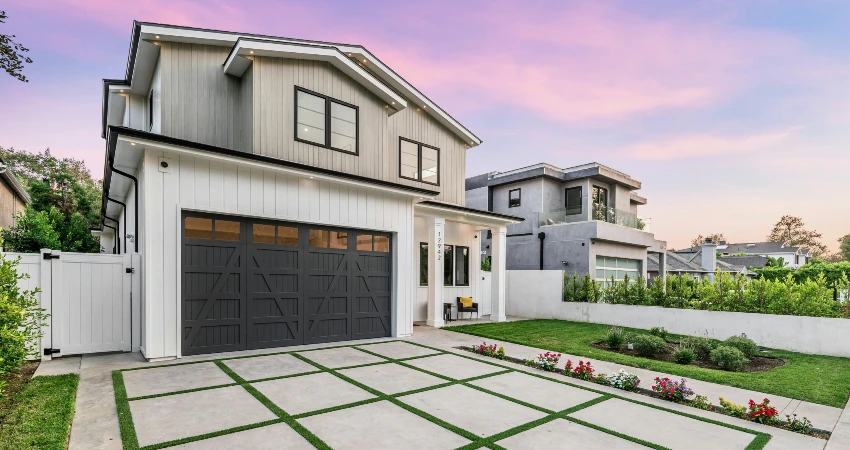
Now for the fun part – customizing your perfect garage door!
Windows and Natural Light
Windows aren’t just decorative – they transform your garage! Adding windows brings in natural light, making your garage feel less like a dark cave and more like usable space.
Window style options:
- Plain glass (traditional)
- Frosted or obscured glass (privacy while keeping light)
- Decorative patterns (adds personality)
Placement options:
- Top row (classic look)
- Full-view (modern, lots of glass)
- Scattered design (cottage or craftsman style)
For personal preference, consider whether you use your garage as a shop or workspace – more natural light might be exactly what you need!
Panel Design and Door Styles
Your panel design dramatically impacts your home’s curb appeal. Here are popular options:
- Raised Panel: The classic look that works with virtually any architectural style. These panels add depth and dimension to your door.
- Flush Panel: Clean, contemporary lines perfect for modern homes.
- Carriage House: Decorative hardware and swing-out appearance (even on sectional doors!) for that vintage charm.
- Glass Panel/Full-View: Sleek aluminum frames with glass panels – very contemporary and floods your garage with natural light.
Garage Door Openers: Finding the Right Fit
Your garage door opener is the hardworking hero that makes life convenient. Here’s what to consider:
- Belt Drive: Quieter operation, perfect if you have bedrooms above the garage. Slightly more expensive but worth it for the peace!
- Chain Drive: More affordable, durable, but noisier. Great for detached garages.
- Smart Openers: Remote control via smartphone, check if your door is closed from anywhere, get alerts when the door opens – perfect for modern homeowners and peace of mind.
Safety Sensors and Security Features
Safety first, always! Modern garage door openers come with safety sensors that automatically reverse the door if something’s in the way. This protects your automobile, your kids, your pets – basically anything that might wander under a closing door.
Additional security features to consider:
- Rolling code technology (prevents code grabbing by thieves)
- Automatic locks
- Vacation mode
- Battery backup (so you’re never locked out during a power outage)
Top Garage Door Brands for Broken Arrow Homes

When you’re ready to shop, these brands consistently deliver quality:
- Clopay: The industry leader with excellent warranty options and countless style choices. Great for homeowners who want proven quality.
- Amarr: Known for energy efficiency and durability. Their insulated doors offer some of the highest R-values available.
- Wayne Dalton: Innovative designs and the TorqueMaster spring system for added safety.
- Overhead Door: The original garage door company with a solid reputation for commercial-grade durability in residential doors.
- C.H.I. Overhead Doors: Excellent value with solid construction and attractive designs.
Installation and Maintenance Tips
What to Expect During Installation
Professional garage door installation typically takes 4-6 hours for a standard door. Here’s the process:
- Remove the old garage door
- Inspect and prepare the opening
- Install new tracks and hardware
- Assemble and install door panels
- Install springs and opener
- Test and adjust everything
- Install safety sensors and program remote control
Seasonal Maintenance Checklist
Keep your new door running smoothly with these simple maintenance tasks:
Monthly:
- Visual inspection of springs, cables, and hardware
- Test safety sensors
Quarterly:
- Clean tracks and remove debris
- Lubricate moving garage door parts (hinges, rollers, springs)
- Test door balance
Annually:
- Professional inspection
- Replace worn weather stripping
- Touch up any paint chips on steel doors
- Check and tighten all hardware
Regular maintenance extends your door’s lifespan and helps you catch small issues before they become expensive problems!
Common Garage Door Buying Mistakes to Avoid
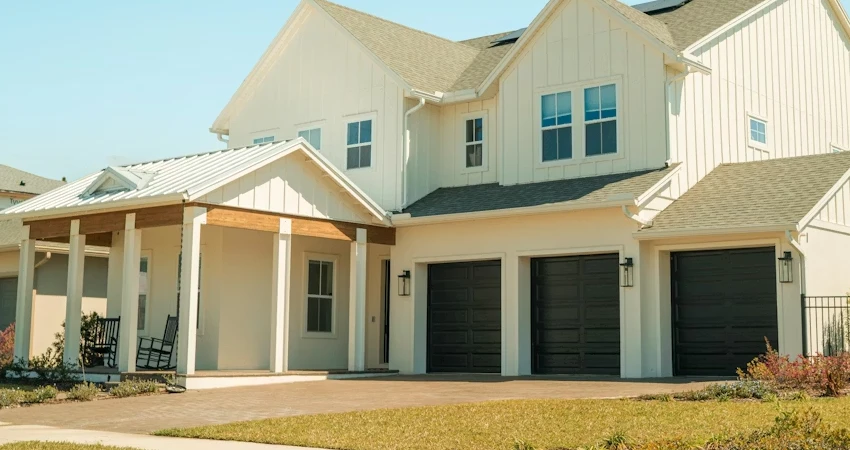
Learn from others’ mistakes! Here are pitfalls to dodge:
- Choosing Style Over Function: Yes, that carriage house door looks amazing, but does it make sense for your space and climate? Consider practical factors alongside aesthetics.
- Skipping Insulation: Especially if your garage is attached – don’t make this mistake! The energy efficiency pays for itself.
- Ignoring Wind Ratings: Broken Arrow can experience high winds. Make sure your door is rated for our local weather conditions.
- Buying Based on Price Alone: The cheapest option usually costs more in the long run through repairs and earlier replacement.
- Forgetting About the Opener: You spent all that money on a beautiful new door – don’t cheap out on the opener!
- Not Getting Multiple Quotes: Shop around! Different companies may offer different pricing or package deals.
- Overlooking Warranty Coverage: Read the fine print! Understand what’s covered and for how long.
Local Considerations for Broken Arrow Homeowners
Living in Broken Arrow comes with specific considerations:
- Weather Resistance: Oklahoma weather is unpredictable. You need a door that can handle:
- High winds from spring storms
- Extreme temperature swings
- Humidity and occasional hail
- HOA Requirements: Some neighborhoods have specific requirements about door colors, styles, or materials. Check before you shop!
- Energy Costs: With our hot summers and cold winters, energy efficiency isn’t just nice to have – it’s essential for keeping utility bills in check.
- Local Building Codes: Broken Arrow has specific codes for garage door installation. Professional installers know these requirements inside and out.
Choose Your Perfect Garage Door
At Jolly Goat Garage Doors, we specialize in professional garage door installation in Broken Arrow. Our team has years of experience helping homeowners find their perfect door – one that fits their style, budget, and practical needs. We handle everything from helping you shop for the right door to expert installation and ongoing maintenance.
Want to discuss your specific needs? Contact us or give us a call at (405) 256-3940 or request a free estimate online. Let’s work together to find the garage door that makes your house feel like home – with a door that works as hard as you do and looks fantastic doing it!
Your perfect garage door is out there, Broken Arrow. Let’s go find it together!