
Your garage door opener is an unsung hero, tirelessly working day in and day out to provide you with seamless access to your storage or vehicle space. Like all mechanical equipment, it requires regular care to keep performing at its best. In this blog post, we’ll share valuable tips on how to extend the life of your garage or car side door opener through proactive maintenance and effective troubleshooting maneuvers.
Related Article: Troubleshooting Common Garage Door Opener Problems
Understanding Garage Door Opener Lifespan
The average lifespan of a garage door opener is roughly 10 to 15 years. However, with proper maintenance and care, it may operate effectively for up to 20 years or more. Factors such as frequency of use, climate, and quality of installation can impact the garage front opener’s lifespan.

Garage and garage door and openers consist of complex systems that undergo wear and tear due to frequent use. The motor, gears, belts, springs, and other components play vital roles in the operation. As these parts age and accumulate stress from regular opening and closing, their efficiency can be compromised.
Maintaining and Extending the Lifespan of Garage Door Opener
Think about how many times you use your garage door on a typical day! It’s a crucial convenience, but also features a hefty mechanical system that, like any machine with power itself, needs attention to stay in top condition. This blog will delve deeper into maintenance for your garage door opener, helping you get the most out of this investment.
Photo Credit: Famartin
Essential Maintenance Practices
- Lubrication is Key: Keep those moving parts running smoothly! Every few months, use a lubricant specifically designed for garage doors on the chain (or belt, if your model has one), the rail, and the rollers. Don’t just guess at the best product – your owner’s manual will give the correct type to use. Remember, plastic parts don’t need lubrication.
- Safety First! Those sensors that keep your family and pets safe need regular checks. Test both the photoelectric “eyes” near the bottom of the track and the auto-reverse function once a month. For the auto-reverse, place a piece of wood under the door while it closes; it should immediately reverse direction.
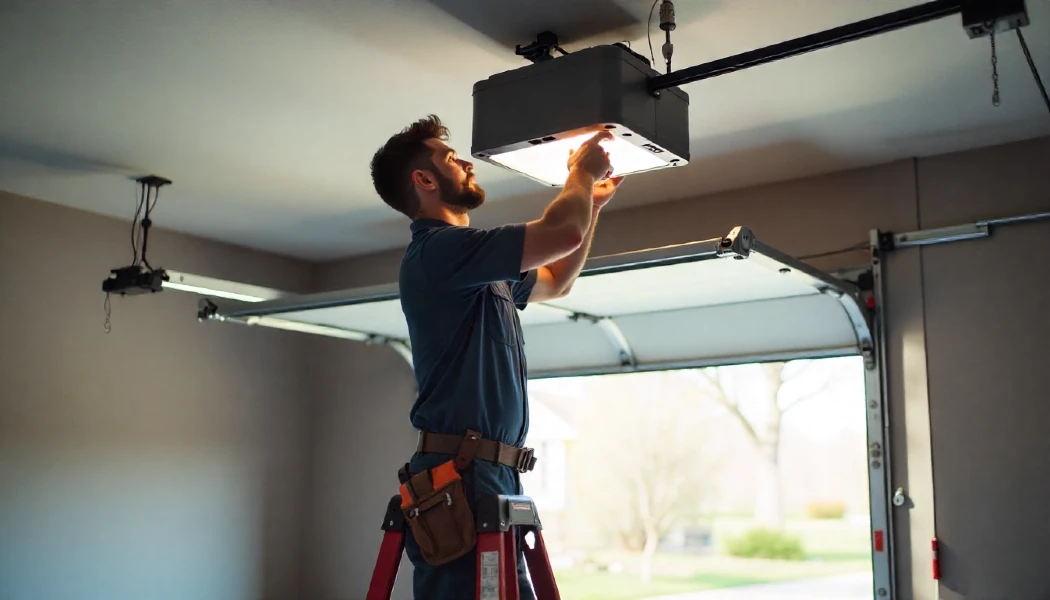
- Tightening Time: Over time, the vibration of regular opening and closing can loosen hardware. Look over the entire opener system regularly and tighten any loose bolts or screws.
- Inspect, Don’t Neglect: Take time to closely examine cables and springs for potential trouble. Look for fraying, kinks, or areas that seem thinner than others. If you’re unsure about what you see, have a professional take a look – it could prevent a more serious problem later.
Warning Signs: Time to Call the Professionals
Don’t ignore these red flags – they mean something needs expert attention:
- Noisy Operation: Screeching, grinding, or other loud, unusual sounds mean wear and tear on the opener’s components.
- Struggling to Function: If the door takes much longer to open or close, it could be a sign of failing parts or a motor running past its prime.
- Unpredictable Reversals: If the door keeps opening or closing partway, then reversing direction unexpectedly, sensors might be misaligned or a part might be faulty.
- Not Working At All: When your opener stops responding entirely, check the power source (including breakers!) first. If that’s not it, a technician is needed.
When Pro Installation is the Smart Choice

Sometimes it’s best to leave garage door opener installation to the professionals. Consider calling for help if:
- Your garage door is exceptionally large and heavy.
- Wiring or electrical work is needed for proper installation.
- You aren’t comfortable working on complex mechanical systems
Maximizing Your Opener’s Lifespan

With regular maintenance, you should expect 10-15 years of service from your opener. To reach the longer end of that range, also keep these tips in mind:
Don’t Force the Issue:
When your door struggles to open and close, get the tracks, rollers, or springs checked before continually trying to force it with the motor.
Balance is Everything:
Your door should be balanced enough to stay halfway open without drifting up or down. If it doesn’t, the opener is under undue strain.
Quality Counts:
A cheaply made garage door opener may not last. Investing in a well-regarded brand can mean more years of dependable use.
Important: Annual Inspections
While DIY maintenance is crucial, it’s still wise to have a qualified garage door technician inspect your system annually. They have the trained eye to catch potential issues before they escalate into major repairs or replacements. And, for those unsure of their mechanical skills, professional garage door opener installation provides more security and worry-free results.
See more in our commercial garage door information center